
The Real Problem With Time
Time Isn’t the Issue We Think It Is
When men say they don’t have enough time, what they’re usually describing isn’t a shortage of hours — it’s a lack of structure. We all wake up to the same twenty-four hours. Some people move through them with clarity and intention. Others feel like the day is already lost before it even begins.
The difference isn’t motivation, discipline, or even effort. It’s organization. Time itself is neutral. It doesn’t speed up when you’re overwhelmed or slow down when you need a break. It simply exists. What determines whether time feels supportive or suffocating is how it’s arranged.
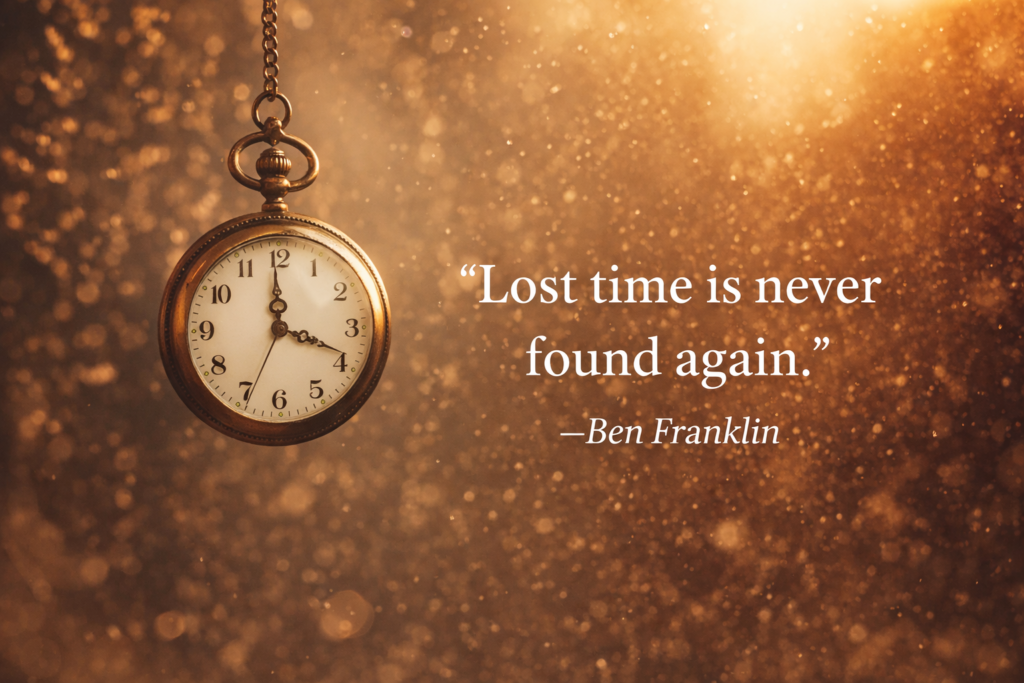
Time itself is neutral. It doesn’t speed up when you’re overwhelmed or slow down when you need a break. It simply exists. What determines whether time feels supportive or suffocating is how it’s arranged.
Why Time Feels Like It’s Working Against You
Disorganization rarely shows up as chaos. More often, it appears as constant reaction. Emails dictate the morning. Small tasks interrupt focus. Decisions stack up faster than they can be resolved. Before long, you’re busy all day without making meaningful progress.
That pattern creates a quiet pressure — the sense that no matter how hard you work, you’re always behind. And when that feeling lingers long enough, frustration takes root. Not because you aren’t capable, but because your time has no clear order.
Reframing the Problem
The truth is uncomfortable but empowering: most men don’t need more time. They need fewer demands competing for the same attention. When time is unstructured, effort gets scattered. Energy drains early. Focus fragments.
The solution isn’t pushing harder — it’s restoring order so your effort actually counts. Once you see that clearly, time stops feeling like the enemy. It becomes a resource again — one you can respect, protect, and use with intention.
How Disorganization Quietly Steals Progress
Disorganization doesn’t usually announce itself as failure. It hides behind movement. Days get filled with activity, but very little of it feels decisive. You respond instead of execute. You handle what’s loud instead of what’s important. Over time, progress slows—not because you stopped working, but because your effort is being pulled in too many directions.
This is how momentum erodes quietly. Nothing dramatic breaks. Nothing obvious collapses. You just start feeling like you’re running hard and going nowhere. That feeling isn’t a motivation problem. It’s a structural one.
This book challenges the belief that doing more leads to better results. It makes a clear case for removing the nonessential so time, energy, and focus are applied where they actually matter. Essentialism reinforces the idea that progress comes from order and discernment—not busyness.
The Cost of Fragmented Focus
When priorities aren’t clearly defined, everything feels urgent. And when everything feels urgent, focus becomes impossible to protect. Fragmented focus creates decision fatigue. Small tasks linger longer than they should. Important work gets postponed because there’s never a “right time” to address it.
The mind stays busy, but clarity stays out of reach. Eventually, even simple responsibilities begin to feel heavy—not because they are difficult, but because they’re competing for attention in an already crowded mental space. Cal Newport’s Deep Work makes the case that focus is not a personality trait but a discipline shaped by environment and structure. When attention is constantly interrupted, progress slows — not from lack of effort, but from lack of protected concentration. Focus doesn’t disappear because you lack discipline. It disappears because it has nowhere to land.
Time Is Not the Enemy
It’s easy to treat time like an adversary—something constantly working against you, applying pressure, creating urgency. But time isn’t doing that. Disorganization is. Time doesn’t demand immediate responses. It doesn’t force poor decisions. It doesn’t create overwhelm.
Those things emerge when structure is missing and boundaries are unclear. Once you stop blaming time, you regain agency. You move from reaction to responsibility. And that shift alone restores more control than most people realize.
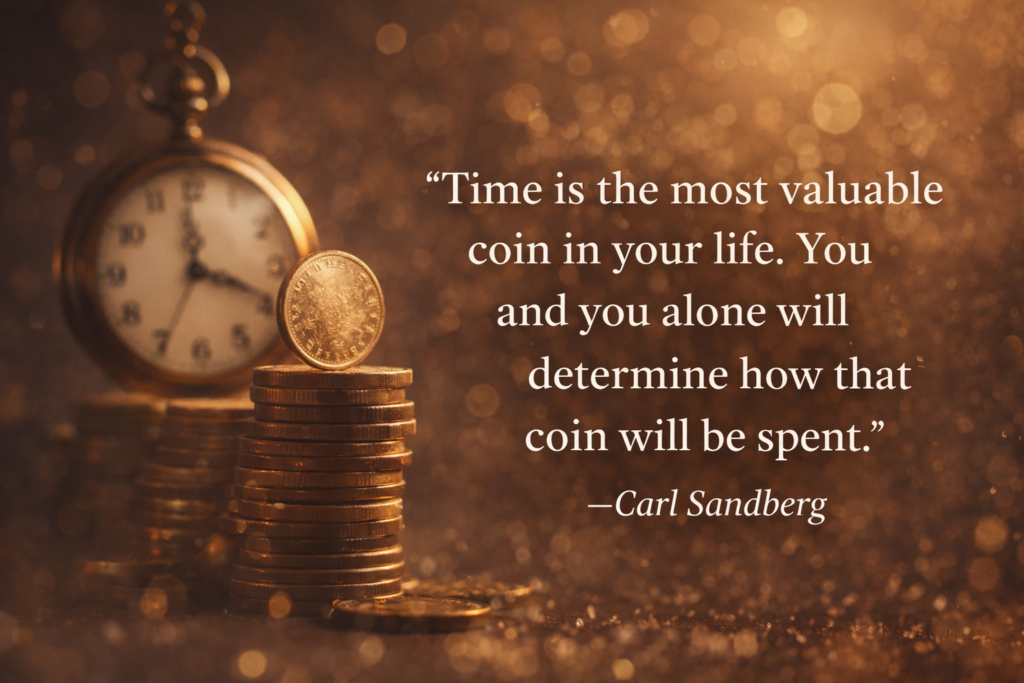
Organization as Leadership
Organization isn’t a personality trait.
It’s a leadership skill. Strong leaders don’t just work hard—they decide clearly. They create order around their commitments, their calendars, and their energy. They understand that saying yes to everything is not generosity; it’s abdication.
Leadership requires sacrifice, but it also requires judgment. Organization is what allows effort to translate into results instead of exhaustion. Structure doesn’t limit freedom. It protects it.
Finding the Leaks
Most time loss doesn’t come from major failures. It comes from small, repeated leaks. Unnecessary meetings. Open-ended commitments. Habits that consume attention without producing value. Avoided decisions that linger longer than they should. Fixing this doesn’t require optimization. It requires honesty.
Where is your time going that doesn’t align with your priorities? What are you tolerating that quietly drains focus and energy? You don’t need to add more. You need to remove what no longer serves the direction you’re trying to go.
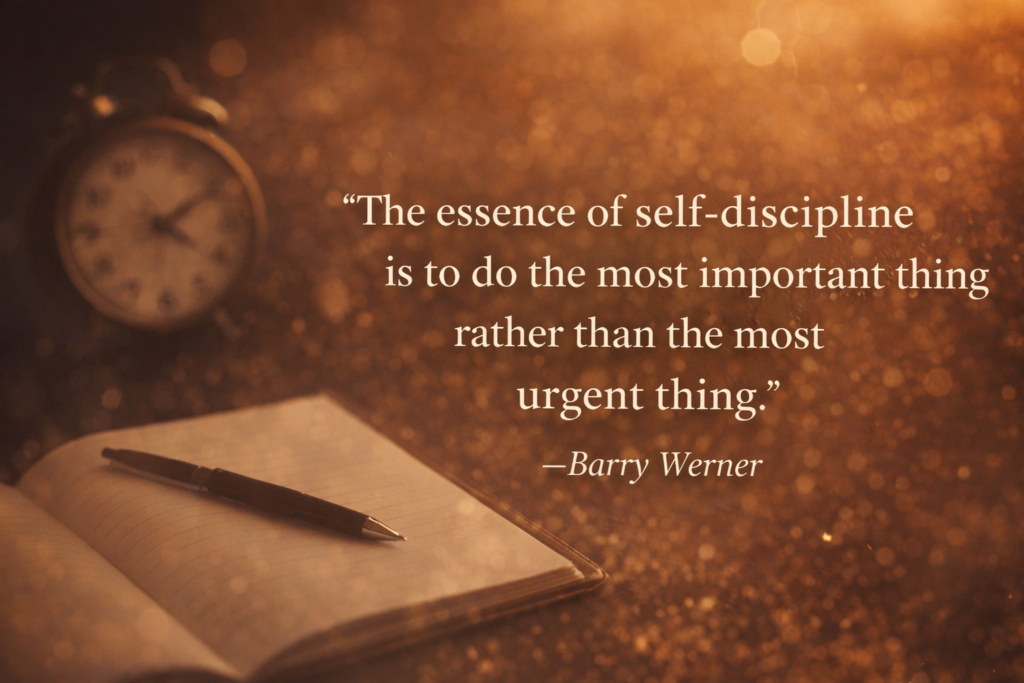
Rebuilding Trust Through Structure
One of the least discussed benefits of organization is self-trust. When your days have structure, you start keeping promises to your own schedule. You follow through more often. You stop renegotiating with yourself at every moment of resistance.
That consistency rebuilds confidence—not the loud kind, but the reliable kind. The kind that comes from knowing you can be counted on by others because you first learned to count on yourself. Structure turns intention into follow-through.
Taking Time Back
Time doesn’t need to be managed like an enemy. It needs to be respected like a resource. Organization gives you margin. It creates space to think clearly, decide calmly, and act deliberately.
It transforms pressure into progress and effort into momentum. You don’t need more hours. You need order. And when order is restored, time stops slipping away—and starts working with you again.