
Real talk: when belief returns

When Belief Starts to Return
There comes a moment in every man’s life when the mirror starts reflecting more than just the lines on his face. It reflects the gap between who he is… and who he once dreamed of becoming.
We all have dreams we let go of. Some were pipe dreams—we know that. But others? They were legitimate goals, real possibilities, things we believed we could achieve until life knocked the wind out of us.
Over time, discouragement, failure, or just the sheer grind of surviving made those dreams feel foolish. So we buried them. Laughed them off. Pretended we never really cared that much. But deep down? We did.
And some of us still do.
“This isn’t just theory. This is personal.”

A little over three years ago, when I was facing severe adversity and struggling to find a decent-paying job, I got a call from a gentleman who had seen my résumé online. He asked if I’d be interested in coming in for an interview for a sales position.
Thing was, I had just landed a job—a union warehouse role. It wasn’t ideal, but it was work. I tried to get out of the interview, made excuses, but the man was persistent. He was even willing to wait until I got off my shift just to speak with me. So I agreed.
That interview lasted an hour and a half. We talked about everything—most of it had nothing to do with the job. It felt more like a conversation with someone who actually saw me, not just my past.
The very next day, he offered me the job. And just like that, my life changed forever.
I mean—if this man, the president of a successful company, could believe in me… how could I not?
It helped me start believing in myself again. Fast forward three years, and I’m now one of the top sales reps in my company. Not because I had all the answers. Not because it was easy. But because someone helped me light that spark again—and I kept fanning the flame.
You see, belief doesn’t just magically reappear. It returns when you move. When you take a risk.
time to bet on you
That doesn’t mean you need to have it all figured out. You won’t. None of us do at the start. But what you do need is to stop waiting for the perfect moment. It doesn’t exist.
The truth is, change rarely announces itself with trumpets and flashing lights. It usually shows up as a quiet opportunity—a conversation, a second chance, a whisper that says, “What if you gave it one more try?”
Too many men are stuck in neutral, afraid to shift gears because they’ve stalled before. I get it. But staying stuck is a decision too. And it costs more than you think.
You lose time. You lose passion. Worst of all—you lose belief.
The good news? You can get it back. All of it.
But no one’s handing it to you. You have to reach for it. You have to do the one thing most men avoid:
Look yourself in the mirror and admit you’re not where you want to be… yet.
That’s not weakness. That’s the beginning of real strength. Because once you’re honest about where you are, you can start figuring out where you’re going.
And that starts with setting goals.
Goals matter—plain and simple. It’s nearly impossible to move forward with any real momentum if you don’t know where you’re headed. Goals are your rudder. Without them, you drift. You get caught up in the winds of distraction, pulled in a hundred different directions, reacting to life instead of directing it.
An overall goal gives you purpose. It brings clarity. It allows you to create a plan, to measure your progress, and to make adjustments when the waters get rough. You don’t just get up and “hope it’s a good day.” You get up with intention.
Once you determine where you want to get to, then you can start mapping out how to get there. That’s when things begin to change—because now, you’re no longer reacting to life. You’re building it.
The path might not be clear at first, and it won’t be a straight line. But when you know the destination, you can begin to chart your course. You can decide what to say yes to—and what to walk away from. You can build habits that support the mission, not distract from it.
this is where routine comes in
Routine isn’t about rigidity. It’s about rhythm. It’s about creating structure that supports your goals instead of sabotaging them.
When I finally started to rebuild my life, I didn’t do it by chance. I built it by repetition—by stacking consistent actions that aligned with where I wanted to go. That’s the quiet power of routine: it removes the guesswork. It keeps you anchored when emotions shift or motivation dips. It builds belief one small win at a time.
A solid routine doesn’t have to be complicated. But it does have to be intentional. When your days have shape, your life begins to take shape. Your time starts working for you—not against you. And when your actions start matching your goals, momentum kicks in.
A routine saves time—the one thing we have a finite amount of. And the more time you reclaim, the more of your life you take back.
So here’s the truth, plain and simple: Belief returns when movement begins.
Direction sharpens when goals are set. And success multiplies when routine locks it all into place.
The dream isn’t dead. It’s just waiting on you. You’ve got what it takes. Now aim yourself in the right direction… and move.
Understanding Motivation: External vs. Internal
Motivation is real—but not all motivation is created equal.
Most people chase the kind that fades fast. External motivation. It’s the hype, the playlist, the Instagram quote, the fired-up podcast. It’s someone else lighting the match for you. And sure, it works—for a while. It might get you off the couch, get you to the gym, get you started on that project.
But what happens when the music stops? When no one’s cheering? When it’s just you, tired, with a decision to make?
That’s where internal motivation shows up—or doesn’t.
Internal motivation is built, not borrowed. It’s the fire that burns from within. It comes from knowing why you’re doing what you’re doing. It’s tied to your values, your vision, your identity. It doesn’t depend on outside praise or temporary hype. It’s the kind of fuel that lasts through storms.
When your motivation is internal, you stop needing permission. You stop needing to be pumped up. You move because the mission matters. And that kind of drive? It’s dangerous—in the best way.
External motivation may start the engine. But internal motivation keeps it running.
And here’s something else you need to know: Motivation can’t be rooted in desire alone.
Wanting a new car, a bigger house, a fatter bank account—those things might spark action. But they won’t sustain it. Why? Because once the thrill fades, so does the drive.
Desire is emotional. And emotions are unpredictable.
Even more dangerous? When your motivation is tied to another person.
Maybe it’s about proving someone wrong. Or impressing someone new. Maybe it’s about getting attention, earning praise, or holding onto something—or someone—you’re afraid to lose. But here’s the truth: when your fuel comes from someone else, you’re handing them the keys to your engine. And no matter how beautiful she is, or how badly you want to impress her, your growth can’t depend on her presence.
Because what happens if she leaves?
Or changes?
Or simply doesn’t respond the way you hoped? You stall. You spiral. You start doubting yourself again.
That’s why your motivation has to be rooted in something deeper—you. Your values. Your purpose. Your legacy. Those are the things that last. That hold up under pressure. That push you forward when life throws curveballs.
Build your fire on something that can’t be taken away. That’s when motivation turns into momentum.
Identity-Based Motivation

If motivation is the fuel, then identity is the engine. You can’t run on hype alone—you need to become the kind of person who does the things you want to achieve.
When you start seeing yourself as someone who takes care of his body, you hit the gym differently. When you believe you are a man of discipline, you approach your day with structure. When your identity shifts, your habits follow.
When you start seeing yourself as someone who takes care of his body, you hit the gym differently. When you believe you are a man of discipline, you approach your day with structure. When your identity shifts, your habits follow.
As James Lane Allen said:
“Adversity does not build character, it reveals it.”
As James Lane Allen said : “Adversity does not build character, it reveals it.”
Self-Worth and Self-Respect
For most of my adult life, I settled for my circumstances because I thought that was what I deserved. I knew the things I had done, the thoughts I’d had, and I didn’t believe I deserved the life I wanted. I didn’t believe I deserved better.
So I continued with the self-destructive behaviors that hurt me—things that kept me separated from the dreams of my youth.
But here’s what I’ve learned: You can’t outwork self-loathing. You can’t build a new life while clinging to old shame.
You have to learn to forgive yourself, to see yourself as worthy—not because you’ve been perfect, but because you’re growing.
Self-respect isn’t something you earn after success. It’s something you practice on the way there.
You start by showing up for yourself. Keeping promises to yourself. Holding your head up, even when no one’s looking.
Because when you begin to respect yourself—your time, your body, your word—your entire life rises to match.
Discipline: The Multiplier
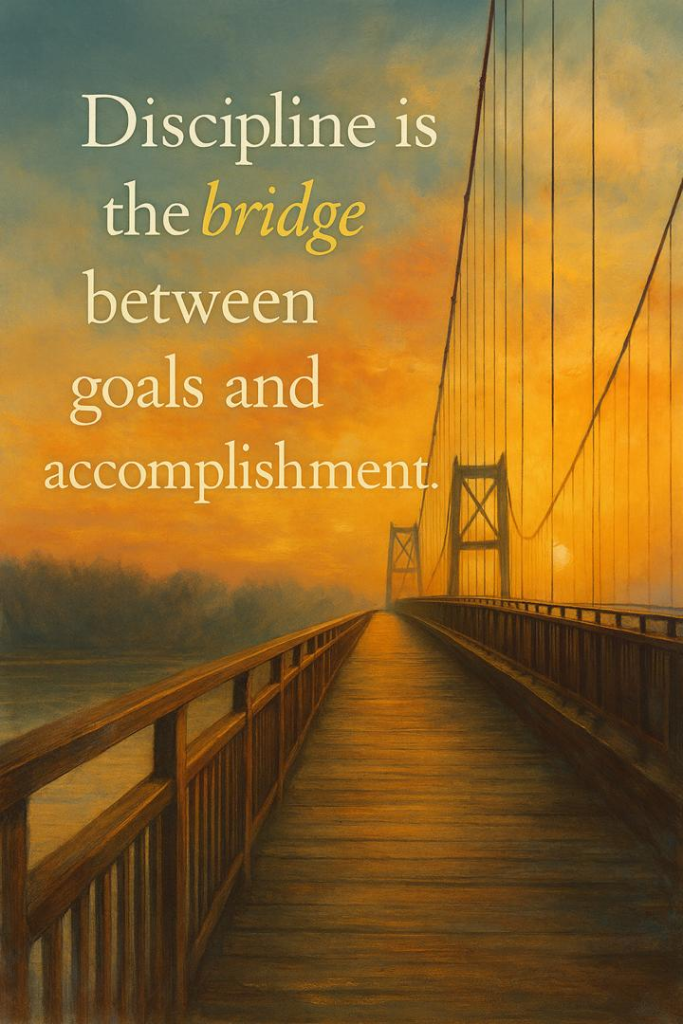
Motivation may get you started. Identity keeps you aligned. But discipline is what carries you through. Discipline is doing what must be done—even when you don’t feel like it. It’s not glamorous. It’s not always inspiring. But it works.
Big results don’t come from big actions once in a while. They come from small improvements repeated consistently. You won’t always be motivated. That’s normal. But if you’re disciplined—you’ll keep going anyway.
And in the end, that’s what separates those who wish from those who win.
Conclusion: Where You Go From Here
It doesn’t matter where you’re starting from. What matters is where you want to go—and what you’re willing to do to get there.
This isn’t just about recovering lost dreams. It’s about becoming the kind of man who never lets them go again. You’ve read this far because something in you still believes.
Let that belief move you. Let it guide your goals. Let it show up in your routine. Let it burn in your identity.
And when it gets hard—because it will—let discipline carry you forward.Because the best version of you isn’t waiting at the finish line. He’s being built with every decision you make from this day forward.
Let’s move.