
There is a quiet difference between being patient and being avoidant. Patience waits because timing matters. Avoidance waits because the truth would require change.

The Truth You Avoid Is the One Holding You Back
Avoidance waits because the truth would require change. Most people don’t get stuck because they lack motivation, discipline, or intelligence. They get stuck because there is a truth they already know—something they’ve sensed for a long time—and they keep finding ways to step around it.
Not loudly.
Not dramatically.
Quietly.
How Avoidance Hides in Plain Sight
They stay busy. They plan. They reflect. They “work on themselves.” They tell themselves they’re being thoughtful, careful, or responsible. And because those things are usually good, avoidance can hide inside them for years without being recognized. Avoidance doesn’t always look like procrastination. Sometimes it looks like preparation.
It looks like reading another article instead of making the decision. It looks like refining the plan instead of taking the step. It looks like waiting for confidence instead of acting with uncertainty. The cost of avoidance is rarely immediate.
That’s why it works so well. The cost shows up later as stalled momentum, eroded self-trust, and the quiet sense that you’re capable of more—but somehow can’t access it. Avoidance is rarely about laziness. It’s usually about protection.
Why Humans Avoid the Truth
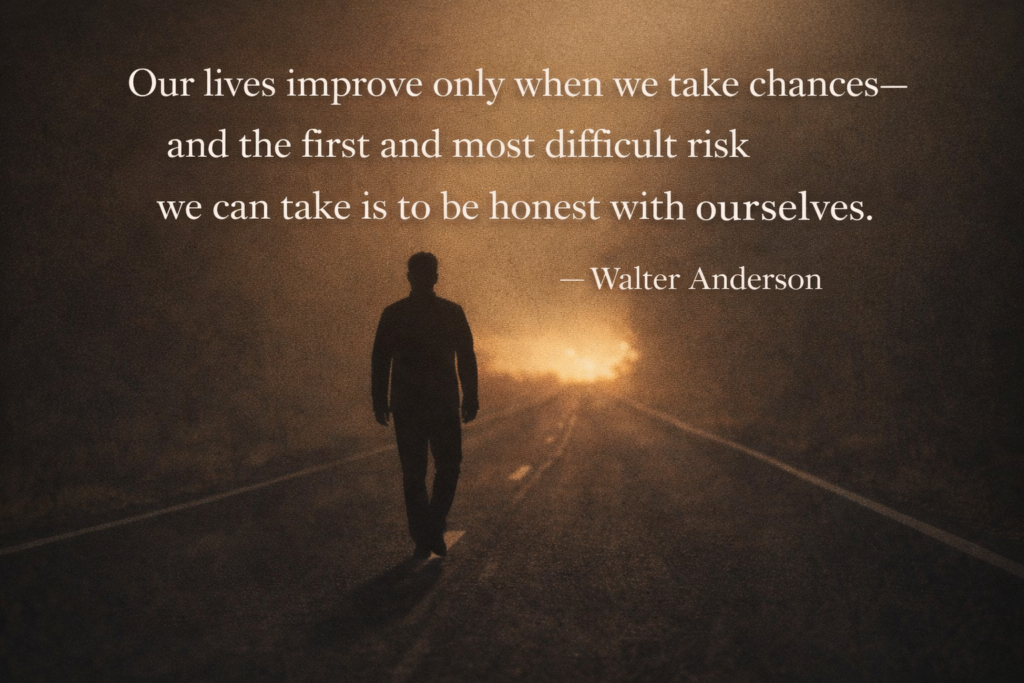
We avoid the truth because the truth threatens something we’re trying to protect. Sometimes it threatens comfort. Sometimes it threatens identity. Sometimes it threatens relationships, routines, or the story we tell ourselves about who we are.
If the truth is, “This isn’t working,” then the truth demands change. If the truth is, “I’ve been avoiding responsibility,” then the truth demands ownership. If the truth is, “I’m not where I want to be,” then the truth demands humility and effort. That’s a high cost.
How Avoidance Protects the Self
So the mind looks for safety. It looks for explanations that soften the demand:
• “I just need more time.”
• “I need to be sure.”
• “Now isn’t the right season.”
• “I’m waiting for clarity.”
These aren’t outright lies. They are partial truths used as shelter. Avoidance isn’t rebellion against truth. It’s hesitation in the face of what truth would require. Psychologically, this makes sense. Humans are wired to avoid loss more strongly than they seek gain.
Threats to identity, stability, or belonging register as danger—even when change would ultimately be beneficial. That’s why avoidance often feels reasonable. It feels calm. It feels prudent. It feels mature. And that’s why it’s so hard to see.
But avoidance has a telltale effect: nothing actually changes. You think about change. You talk about change. You prepare for change. But you don’t move. And the longer that pattern continues, the heavier the truth becomes—not just because of the original issue, but because of the time spent circling it.
Patience vs. Avoidance
Patience and avoidance can look identical on the surface. Both wait. Both delay action. Both pause movement. But they are driven by very different intentions. Patience waits because timing matters. It is anchored to clarity and preparation.
Even while waiting, patience is oriented forward. Avoidance waits because action would require discomfort. It delays not because the time isn’t right, but because the cost of moving feels too high. A simple distinction helps: Patience produces readiness. Avoidance produces relief.
Relief feels good in the short term. It feels like setting something down. Like granting yourself permission not to decide yet. But relief that does not lead to readiness is usually avoidance. Patience sharpens you. Avoidance dulls you. When you’re being patient, your thinking becomes clearer. The path forward becomes more defined. You sense that when the moment arrives, you’ll know what to do.
When you’re being avoidant, the opposite happens. The same questions repeat. The same plans get revisited. Nothing resolves. This is how people spend months—or years—thinking about the same problem. They aren’t waiting for clarity. They’re waiting to feel comfortable. And comfort rarely arrives when something important needs to change. Momentum doesn’t collapse from one bad decision. It erodes from repeated non-decisions.
The Hidden Cost of Avoidance
Avoidance rarely destroys things all at once. It delays. It softens. It postpones. And because there’s no immediate consequence, it feels harmless. But the cost accumulates.
The Cost to Self-Trust Every time you avoid a truth you already know, you teach yourself something quietly but powerfully: I don’t follow through when things get uncomfortable. Over time, that lesson becomes identity.
Self-trust isn’t confidence. It’s reliability. It’s the belief that when you say you’ll do something—especially something hard—you will show up for it.
Avoidance erodes that belief.
And when self-trust weakens, motivation becomes harder to access. Discipline feels heavier. Restarting feels exhausting—not because you’re incapable, but because part of you no longer believes effort will lead to follow-through.
The Cost to Momentum Momentum depends on continuity. Avoidance interrupts continuity. Each time you circle the same truth without acting on it, momentum stalls. The energy that could have been used for movement is redirected into thinking, rationalizing, or distraction. Restarting becomes the pattern. Restarting is expensive. It costs emotional energy. It creates frustration. It introduces shame. Momentum doesn’t disappear because you slow down. It disappears because you stop deciding.
The Cost to Peace
Avoidance doesn’t create peace. It creates background noise. Unfaced truth follows you quietly. It drains energy. It turns rest into restlessness. This is why people can relax physically but never feel settled. Facing the truth feels heavy at first.
Unresolved truth is heavier over time. The Cost to Future Options Avoidance narrows options gradually. Health becomes harder to recover. Relationships become harder to repair. Finances become harder to stabilize. Opportunities become easier to miss. Avoidance is not punishment. It’s accumulation. Small delays compound. Small leaks sink ships.
Facing the Truth Without Drama
Many people avoid truth because they believe it will require drastic action. Quit everything. Burn it down. Start over. But truth does not require drama. It requires honesty.
Most truths don’t demand immediate transformation. They demand acknowledgment. Truth is destabilizing only when it’s avoided. When it’s faced, it clarifies. Truth is not punishment. Truth is commitment. Not as punishment—but as commitment.
Name the Truth Precisely. Avoidance thrives on vagueness. “I need to get my life together” is vague. “I’m inconsistent with my time” is precise. Precision removes fear. Defined problems are solvable.
Separate Truth from Self-Condemnation. Truth is descriptive, not punitive. “I’ve been avoiding this conversation” is a fact. “I’m a coward” is a judgment layered on top. Honesty does not require self-attack. Reduce Truth to Action Truth that never becomes action turns back into avoidance. The question isn’t “What should I do with my life?” It’s “What is the smallest honest step I can take next?”
Small steps are not avoidance. They are commitment made manageable.
Truth as the First Act of Commitment
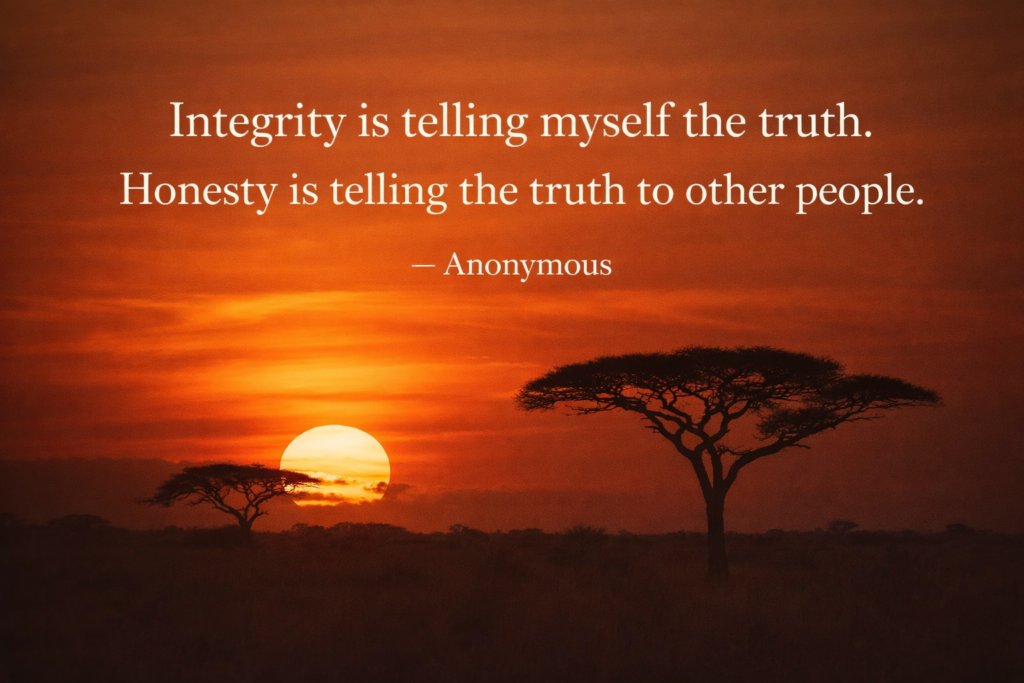
Momentum does not begin with motivation. It begins with commitment. And commitment begins with truth. Truth ends negotiation. You stop waiting for feelings to align. You stop hoping the problem resolves itself. You stop pretending the issue is unclear.
Truth draws a line. On one side is avoidance. On the other is commitment. Structure becomes possible once that line is crossed. Truth is the foundation beneath discipline. Structure is what protects it.
A Universal Invitation
If you feel stuck, you may not need a new plan. You may not need more motivation or more discipline. You may need to face a truth you’ve been avoiding. Not because you’re weak. Not because you’re broken. Because you’re human.
Truth doesn’t demand perfection. It doesn’t demand urgency. It demands honesty. And honesty is a form of courage. When you face the truth plainly, something shifts. You stop circling. You stop stalling. You stop waiting to be rescued by motivation. And you begin building the only kind of momentum that lasts: The momentum that comes from being honest about what needs to change—and taking the next right step anyway.
Recommended Reading
THE COURAGE TO BE DISLIKED
Ichiro Kishimi & Fumitake Koga
This book challenges the idea that our past, circumstances, or the expectations of others determine who we become. Through the lens of Adlerian psychology, it confronts people-pleasing, avoidance, and identity protection head-on, arguing that real freedom begins when we take responsibility for our choices and stop living for approval.
MAN’S SEARCH FOR MEANING
Viktor E. Frankl
Frankl’s reflections on suffering, responsibility, and meaning show that even in the harshest conditions, humans retain the ability to choose their response. Meaning is not found in comfort or ease, but in commitment to what matters, regardless of circumstance.