
Standards Over Motivation
There is a common belief that meaningful change begins with motivation. People imagine a moment of sudden clarity – a burst of energy that finally makes the difficult path feel possible. They wait for the morning when they wake up feeling different. The day when discipline feels natural. The moment when effort no longer feels heavy. But that moment rarely arrives.
Motivation is one of the most unreliable forces in human behavior. It rises when things are going well and disappears the moment resistance appears. When life becomes difficult, motivation is often the first thing to leave the room. Yet meaningful progress is built every day by people who do not feel particularly motivated. The difference is not emotion. The difference is standards. Motivation asks a simple question: Do I feel like doing this today? Standards ask a very different question: Is this who I am?
That distinction may seem small at first. But it changes everything. When a person operates from motivation, their actions fluctuate with their feelings. Some days they push forward with energy. Other days they hesitate, delay, or rationalize. But when a person operates from standards, the conversation changes entirely. The work gets done because that is the standard. The training happens because that is the standard. Difficult conversations take place because integrity demands it.
Standards remove negotiation from the process. They establish a line that behavior must meet regardless of mood, fatigue, or temporary discouragement. This is where real momentum begins. Not in the emotional surge people often call inspiration, but in the quiet decision that certain behaviors are no longer optional.
Over time, those behaviors begin to shape something far more powerful than motivation. They begin to shape identity. When we make the decision to change our life, especially when it is a drastic change like I made we often have to make that choice more than once.

The Difference Between Goals and Standards
Many people spend years chasing goals without realizing why their progress keeps stalling. Goals are powerful, but they are often misunderstood. A goal describes an outcome. A standard defines behavior. The difference between the two determines whether progress is temporary or lasting. Someone might set a goal to lose thirty pounds. But unless their daily behavior changes—how they eat, how they train, how they manage their time-that goal remains little more than a hopeful intention.
The same principle applies across every area of life. A man may say he wants to build financial independence. But if his standard is not daily study, careful decision-making, and consistent effort, the goal remains distant. Another may say he wants stronger relationships. But if his standard does not include honest communication, presence, and effort, those relationships slowly erode. Goals point toward the destination. Standards determine whether you actually move.
When standards are clear, behavior becomes predictable. And when behavior becomes predictable, progress becomes inevitable. The problem most people encounter is that they attempt to reach extraordinary goals while maintaining ordinary standards. That imbalance rarely holds for long.
Execution Builds Identity
There is a psychological effect that unfolds quietly through repetition. Every action sends a signal to the brain. When you follow through on something difficult, the signal is clear: I keep my word. When you avoid something you know you should do, the signal is just as clear: I hesitate. What feels like progress is often just repetition.
In psychology, it’s called rumination – thinking about the problem without acting – and it keeps people stuck.
These signals accumulate over time. They begin to shape the way you see yourself. Many people think confidence comes from success. But more often, confidence grows from reliability-the knowledge that when something needs to be done, you will show up and do it. Self-trust is built through execution.
Every time you follow through on a commitment, no matter how small, you reinforce a powerful internal message: I am the kind of person who does what I say I will do. And once that identity begins to solidify, motivation becomes far less important. You no longer act because you feel inspired. You act because that is what you do.
There is another misconception about change that keeps many people stuck. They assume transformation must begin dramatically. They imagine a moment where everything shifts overnight—where discipline suddenly appears and life reorganizes itself around a new direction. But lasting change rarely begins with dramatic action. It begins quietly. It begins with small decisions repeated consistently. Waking up earlier. Choosing the harder path when the easier one is available. Completing the task that would be easier to postpone. Keeping a promise no one else would know if you broke. These actions rarely look impressive in isolation. But over time they compound. Small execution builds momentum. Momentum builds confidence. Confidence builds capacity. And eventually those small decisions reshape entire lives. The outside world often notices only the result. But the real transformation happened long before, in the quiet repetition of disciplined choices.
The Quiet Power of Small Execution
There is another misconception about change that keeps many people stuck. They assume transformation must begin dramatically. They imagine a moment where everything shifts overnight-where discipline suddenly appears and life reorganizes itself around a new direction. But lasting change rarely begins with dramatic action.
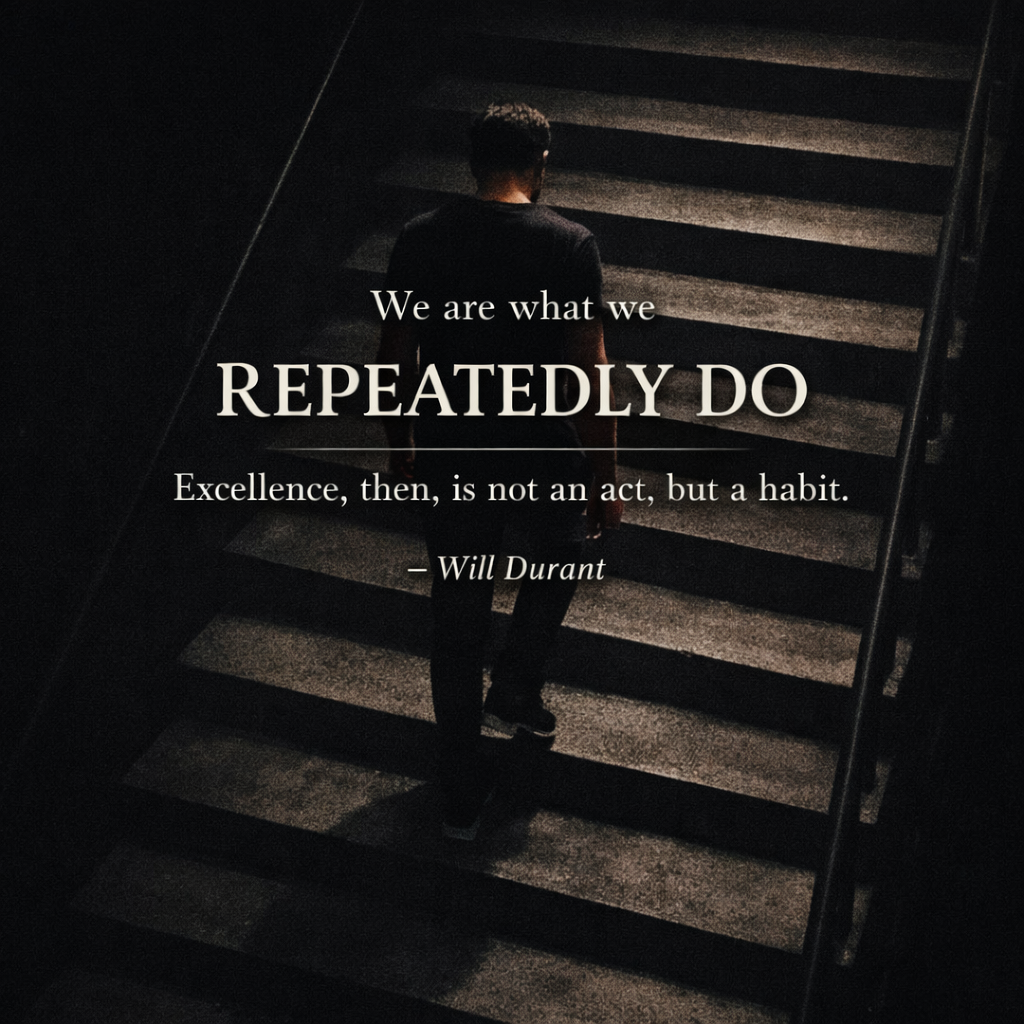
It begins quietly. It begins with small decisions repeated consistently. Waking up earlier. Choosing the harder path when the easier one is available. Completing the task that would be easier to postpone. Keeping a promise no one else would know if you broke. These actions rarely look impressive in isolation. But over time they compound. Change doesn’t come from intensity.
It comes from repetition.
Research on habit formation shows that behaviors become automatic through consistent action over time-not bursts of motivation.
Small execution builds momentum. Momentum builds confidence. Confidence builds capacity. And eventually those small decisions reshape entire lives. The outside world often notices only the result. But the real transformation happened long before, in the quiet repetition of disciplined choices.
Why Standards Matter Most When Life Is Difficult
Standards become most important when circumstances become difficult. Anyone can act with discipline when life is comfortable. But when discouragement appears, when progress slows, when setbacks accumulate, the temptation to abandon standards grows stronger. This is where many people begin negotiating with themselves.
They lower expectations. They make exceptions. They promise to restart tomorrow. But every time standards are lowered, something else erodes quietly alongside them. Self-trust. The more often someone breaks the promises they make to themselves, the harder it becomes to believe those promises in the future.
That erosion rarely happens all at once. It happens slowly, through small compromises repeated over time. The opposite process works just as powerfully. Every time a person holds their standard despite discomfort, they reinforce something far stronger than motivation. They reinforce character.
Raising the Standard
The path forward rarely begins with a dramatic declaration. It begins with a decision. A quiet decision that certain behaviors will no longer be optional. Training becomes the standard. Honesty becomes the standard. Effort becomes the standard. Integrity becomes the standard. Once those lines are drawn, the question of motivation becomes far less important.
You no longer ask whether you feel ready. You ask whether your behavior aligns with the standard you have chosen. And over time something remarkable begins to happen. The person you are becoming slowly catches up to the standard you have set. Not because motivation carried you there. But because discipline did.

Closing Thought
Most people spend their lives waiting to feel ready. But readiness rarely arrives before action. The people who build meaningful lives do not wait for motivation. They raise their standards. They execute consistently. And they allow those actions, repeated day after day, to shape the person they are becoming. Because in the end, progress is rarely determined by how inspired you feel. It is determined by the standards you refuse to lower.