
The Moment You Stop Drifting
For years, I knew my life wasn’t what I wanted it to be. I wasn’t the man I wanted to become, and deep down I knew I was capable of more. I had dreams about the future, but I wasn’t doing what was necessary to create it.
Things started to change for an unexpected reason.
If I’m being honest, it began because of a girl.
I knew I wanted her to be part of my future, part of my life. But I also knew she deserved a man who could offer stability, growth, and direction. That realization forced me to look at myself differently.
I started thinking bigger. I started acting on ideas instead of only imagining them. I built this site. I became more intentional with my workouts. I made the decision to move into real estate.
She may have been the reason I decided to change, but taking ownership of my life is what actually created change.
Because motivation can open the door. But structure, discipline, and action are what carry you through it.
Most people aren’t stuck because they lack ideas. They’re stuck because they lack direction.
Not more information. Not another strategy.
Something simple.
Something clear.
Something they can start today that actually moves their life forward.
Because at some point, you have to stop preparing…
and start executing.
I’ve had seasons where I knew exactly what to do
and still didn’t do it.
Not because I didn’t care.
But because I let my structure slip.
My mornings lost intention.
My schedule became reactive.
My energy followed.
Nothing dramatic.
Just small lapses… repeated.
And that’s how most people fall behind.
Not from one big mistake.
But from drifting.
So this isn’t theory.
This is what brings you back.
Read Every Day — Non-Negotiable
One pattern shows up over and over again among high-level performers, executives, and builders:
They read.
Not occasionally. Not when it’s convenient. Every day.
Because reading does two things most people underestimate.
It sharpens how you think. And it expands what you believe is possible.
Research supports this. Regular reading has been shown to improve cognitive function, increase mental flexibility, and strengthen decision-making capacity over time (Stanovich & Cunningham, 1993; Kidd & Castano, 2013).
In simple terms: The more you expose your mind to new ideas, the better you become at navigating complex situations.
I’ve felt this personally.
When I’m reading consistently, I think clearer. I make better decisions. I see options I would have missed otherwise.
When I’m not… everything narrows.
Start simple:
- 10 pages a day
- Every day
- No exceptions
That’s over 3,600 pages a year.
Most people won’t do it. That’s exactly why it works.

recommended Reading
Here are some suggested selections that fit very well with the principles in this post:
THE 5 SECOND RULE
A practical framework for overcoming hesitation and taking immediate action. This book reinforces the idea that momentum is often built in the seconds between thinking and doing.
ATOMIC HABITS
One of the strongest modern books on habit formation and behavioral change. It explains how small actions repeated consistently create massive long-term results.
THE COMPOUND EFFECT
A powerful reminder that success rarely comes from one major decision. It comes from small disciplines repeated over time, often without immediate reward.
CAN’T HURT ME
A raw look at resilience, accountability, and mental toughness. This book challenges readers to push beyond comfort and develop discipline through adversity.
THE SLIGHT EDGE
A simple but effective explanation of how small daily choices compound into dramatically different outcomes over time. Perfectly aligned with the principles of consistency and structure discussed in this post.
Train Your Body — Even When You Don’t Feel Like It
Energy is not random. It’s built.
If your body is tired, inconsistent, and neglected, your mind will follow.
There’s a reason for that.
Exercise has been consistently linked to improved mood, increased energy levels, and enhanced cognitive performance through its effects on neurotransmitters like dopamine and serotonin (Ratey, 2008; Harvard Health Publishing).
This isn’t about looking better. It’s about functioning better.
I’ve seen it in my own routine.
The days I move—even when it’s just walking right now— everything else becomes easier.
The days I don’t… focus drops, patience drops, discipline drops.
You don’t need a perfect program. You need consistency.
- 30–45 minutes
- 4–6 days per week
- Same time each day if possible
Your body drives your output. Take care of it accordingly.
If you’re looking to go deeper into the connection between physical health, mindset, and long-term performance, my book How to Keep Your Engine Running Smoothly: The Secret Science of Metabolism explores how daily habits, energy management, and sustainable routines work together to create lasting change.
Rather than chasing quick fixes, it focuses on understanding how your body functions, how consistency impacts performance, and how small decisions compound into a healthier, more intentional life.
Wake Up With Intention — Not Reaction
Most people lose their day in the first 10 minutes.
They wake up and immediately hand control away.
Notifications. Messages. Noise.
From that moment on, they’re reacting.
And once you start your day in reaction, it’s difficult to recover control.
Studies on attention and digital distraction show that early exposure to notifications increases cognitive load and reduces sustained focus throughout the day (Rosen et al., 2013).
I’ve lived this.
When I start my morning with my phone, I’m chasing the day.
When I don’t, I’m leading it.
Start your day on your terms:
- 10 minutes of silence, prayer, or reflection
- 5–10 minutes reading
- Then move into your day
No noise. No distraction. Just alignment.
Do One Hard Thing First
Most people structure their day around comfort. That’s why nothing changes.
They delay the hard thing. Avoid it. Tell themselves they’ll get to it later.
But “later” is where most things go to die.
There’s a concept in behavioral psychology called avoidance coping— we delay discomfort to protect ourselves in the moment, but it creates larger stress over time (Sirois, 2014).
Doing the hard thing first breaks that cycle.
I’ve had days where one avoided task sat in the background draining energy all day.
And I’ve had days where I handled it immediately— and everything else felt lighter.
Do it first. Before your brain negotiates.
The call. The work block. The decision.
Win early. It carries forward.
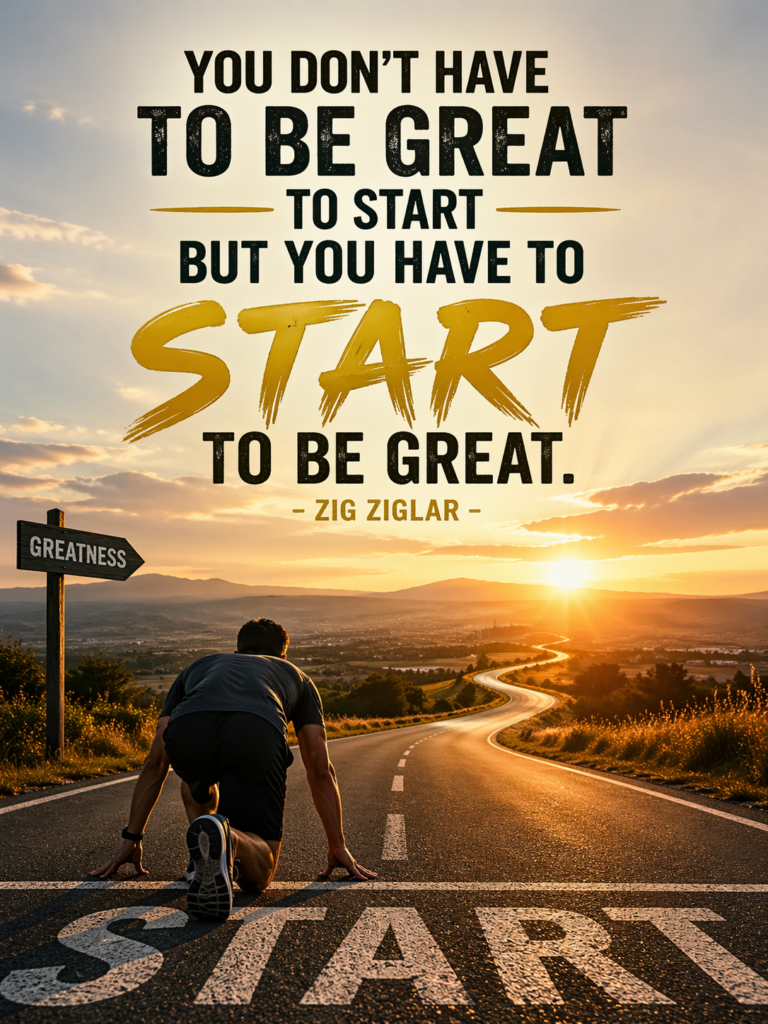
Use the 5-Second Rule
Most people don’t fail because they don’t know what to do.
They fail in the space between knowing
and acting.
That pause is where hesitation lives.
Where doubt builds.
Where momentum disappears.
Close the gap.
When you know what needs to be done:
5… 4… 3… 2… 1…
Move.
This works because action interrupts the brain’s tendency to default to comfort (Robbins, 2017; supported by research on habit loops and action initiation).
The more often you act immediately,
the less power hesitation has.
The problem is not usually laziness.
It’s negotiation.
You tell yourself you’ll do it later.
You wait until you feel ready.
You give your brain time to create excuses.
And the longer you wait,
the heavier the task becomes.
I’ve seen this in my own life.
The things I delay rarely become easier. They become louder.
The call you avoid. The workout you postpone. The task you keep pushing into tomorrow.
It stays in your head. Drains energy. Creates tension.
Action breaks that cycle.
Not because every action is perfect. But because movement creates momentum.
The 5-second rule is not about rushing. It’s about interrupting hesitation before hesitation takes control.
You don’t need to overthink the first step. You just need to take it.
Because confidence is rarely built before action. It’s built because of it.
Track One Standard
Most people try to change everything at once.
That’s why nothing sticks.
Research on habit formation shows that consistency with a single behavior is far more effective than attempting multiple changes simultaneously (Lally et al., 2010).
Pick one thing.
Track it daily.
Did you do it or not?
No excuses.
No stories.
Just truth.
Awareness creates accountability.
And accountability creates change.
The mistake most people make is trying to reinvent their entire life in one week.
They change their diet.
Start a workout plan.
Wake up earlier.
Read more.
Journal.
Meditate.
Remove distractions.
And within days,
it becomes overwhelming.
The problem is not ambition.
It’s overload.
Change becomes sustainable when it becomes measurable.
One standard.
One habit.
One thing you can honestly track every day.
Maybe it’s reading 10 pages.
Maybe it’s going for a walk.
Maybe it’s waking up at the same time.
What matters is not complexity.
What matters is consistency.
I’ve learned that tracking something changes your relationship with it.
You stop guessing.
You stop assuming.
You stop telling yourself you’re doing better than you really are.
The truth becomes visible.
And once you can see the pattern,
you can begin to change it.
Tracking creates awareness.
Awareness creates ownership.
Ownership creates momentum.
Start with one standard.
Master it.
Then build from there.
Most people try to change everything at once.
That’s why nothing sticks.
Research on habit formation shows that consistency with a single behavior is far more effective than attempting multiple changes simultaneously (Lally et al., 2010).
Pick one thing.
Track it daily.
Did you do it or not?
No excuses.
No stories.
Just truth.
Awareness creates accountability.
And accountability creates change.
The mistake most people make is trying to reinvent their entire life in one week.
They change their diet.
Start a workout plan.
Wake up earlier.
Read more.
Journal.
Meditate.
Remove distractions.
And within days,
it becomes overwhelming.
The problem is not ambition.
It’s overload.
Change becomes sustainable when it becomes measurable.
One standard. One habit. One thing you can honestly track every day.
Maybe it’s reading 10 pages. Maybe it’s going for a walk. Maybe it’s waking up at the same time.
What matters is not complexity. What matters is consistency.
I’ve learned that tracking something changes your relationship with it.
You stop guessing. You stop assuming. You stop telling yourself you’re doing better than you really are.
The truth becomes visible.
And once you can see the pattern, you can begin to change it.
Tracking creates awareness. Awareness creates ownership. Ownership creates momentum.
Start with one standard. Master it. Then build from there.
Remove One Distraction
You don’t need more time. You need fewer leaks.
Studies estimate the average person loses significant productive time daily to digital distractions, particularly social media and task-switching (Mark, Gudith & Klocke, 2008).
You feel this even if you don’t measure it.
I’ve seen it in myself.
A few minutes here. A few minutes there.
And suddenly the day feels gone.
The issue is rarely one major distraction. It’s the accumulation.
Checking your phone. Opening an app. Watching one short video that turns into twenty minutes. Responding to something that could have waited.
That time gets reinvested. And when you stop leaking attention, you begin to recover focus.
Stay With It Longer Than You Want To
This is where everything breaks.
People start strong.
Then stop when it gets repetitive.
Or boring.
Or slow.
But progress doesn’t feel exciting most of the time.
It feels quiet.
Research on delayed gratification and long-term success consistently shows that persistence—especially when rewards are not immediate—is one of the strongest predictors of meaningful outcomes (Mischel, 2014).
Most people don’t fail because they chose the wrong path.
They fail because they leave the path too early.
They stop when the results slow down.
When motivation fades.
When the excitement disappears.
But meaningful change rarely announces itself.
You don’t always feel stronger right away.
You don’t always see momentum in real time.
You don’t always get proof that what you’re doing is working.
That’s where discipline matters most.
Not when things feel easy. Not when you’re inspired. But when you’re tired of repeating the same effort without visible reward.
I’ve experienced this personally.
There are seasons where progress feels obvious. And there are seasons where it feels like nothing is moving at all.
The difference is staying anyway.
Because growth compounds quietly.
One workout. One page. One decision. One day of showing up when you don’t feel like it.
That’s how momentum is built.
Stay anyway.
Because results are delayed. But they are not denied if the standard holds.
The Difference Between Knowing and Becoming
You don’t need a new plan next week. You need to execute this one.
For the next 30 days.
No adjustments. No reinvention. No starting over on day four.
Just follow through.
Because the difference between the life you want and the one you’re living… is not hidden.
It’s built in the things you already know but haven’t committed to.
Most people spend years collecting information. Reading. Planning. Preparing.
But preparation alone does not create change.
Execution does.
The hard truth is that most people already know what would improve their life.
They know they need structure. They know they need better habits. They know they need to stop waiting for motivation.
The issue is rarely knowledge. The issue is consistency.
Real change does not happen in one dramatic moment. It happens quietly.
In the decision to show up again. To keep going when progress feels slow. To repeat the behaviors that support the future you want.
You do not need to become a different person overnight. You need to become more consistent with the person you already know you can be.
That is where momentum begins.
And once momentum exists, life starts to move differently.
Not because everything becomes easier. But because you stop negotiating with yourself.
You begin to trust your own follow-through.
And that changes everything.