

When to Dig Deep — and When to Step Back
There’s a message we hear everywhere: push harder.
Dig deeper. Grind longer. Don’t quit.
It’s printed on shirts, repeated in locker rooms, echoed in business advice, and praised in personal development circles. And sometimes, that message is exactly right. Growth often requires discomfort. Progress rarely comes without effort. There are moments when the only honest option is to endure.
But the message is incomplete.
Because effort without discernment doesn’t always move us forward. Sometimes it keeps us stuck—working harder while the real problem quietly grows beneath our feet. What looks like discipline on the surface can actually be avoidance, pride, or fear of slowing down long enough to ask the harder question:
Is this effort still aligned with where I’m meant to go?
Discipline isn’t just the ability to endure discomfort.
It’s the wisdom to know which discomfort is necessary—and which is self-inflicted.
There are seasons that require digging deep. Seasons where progress demands endurance, patience, and consistency long after motivation has faded. But there are also seasons where stepping back isn’t weakness—it’s restraint. It’s clarity. It’s the discipline of choosing long-term direction over short-term pressure.
Learning the difference is one of the hardest skills to develop—and one of the most important.
The Myth of Endless Pushing
The idea that relentless effort always leads to progress is appealing because it feels simple. If something isn’t working, the answer must be more force. More hours. More pressure. More sacrifice.
But force is not the same as discipline.
Endless pushing is often praised because it looks virtuous. It signals toughness, commitment, resolve. From the outside, it appears admirable. Yet beneath the surface, constant pressure can hide deeper issues—misalignment, fear of stillness, or an unwillingness to reassess direction. This is often the result of treating discomfort as a command instead of information.
This is how people burn out while convincing themselves they’re building character.
It’s hard to admit that we may have chosen the wrong path. Pride tells us that if we just keep trying, things will eventually work out. But no amount of effort can compensate for sustained work in the wrong direction. Digging deeper doesn’t help if you’re digging the wrong hole.
Discipline without reflection turns effort into noise. The body stays busy while the mind avoids the harder work of asking whether the path itself still makes sense. Movement becomes a substitute for clarity.
There’s a difference between perseverance and stubbornness.
And it isn’t always obvious in the moment.
True discipline is not blind endurance.
It’s intentional endurance.

When Digging Deep Is the Right Choice
There are moments when digging deep is the only honest option.
You dig deep when the work is aligned with your values and the resistance you feel is simply the cost of growth. When progress is slow, but direction is clear. When discomfort is purposeful—not destructive.
Digging deep is often required when:
-
You’re tempted to quit because something is difficult, not because it’s wrong
-
Fatigue is present, but clarity remains
-
The work demands patience, not escape
-
Discomfort is refining you, not eroding you
In these seasons, discipline looks like showing up again. Choosing consistency over comfort. Trusting that effort, applied wisely, compounds—even when results are delayed.
This is where discipline earns its reputation—not as punishment, but as commitment. Because once the decision is made, the real work becomes learning how to build momentum when motivation is gone.
Anchor text:
Many people abandon worthwhile paths not because they’re wrong, but because they underestimated the cost of staying. Digging deep in these moments isn’t heroic—it’s faithful. It’s honoring the long game when short-term feedback is discouraging or absent.a
The Role of Faith in Discernment
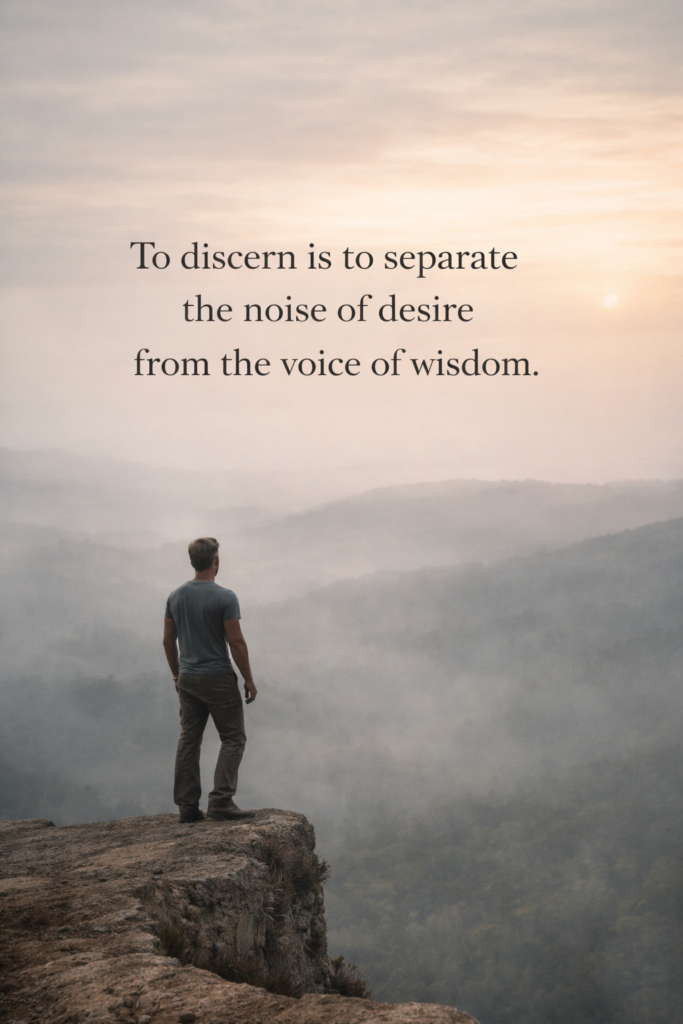
Effort alone isn’t enough to guide decisions about when to push and when to pause. Without a deeper framework, effort defaults to instinct—and instincts are often shaped by fear, pride, or habit.
This is where faith matters.
Faith introduces restraint into action. It slows the impulse to force outcomes and replaces it with trust in timing, purpose, and alignment. Not faith as optimism—but faith as discipline.
The willingness to listen before acting.
To wait without quitting.
To move forward without needing certainty.
Without faith, digging deep becomes striving. Everything feels urgent. Every pause feels like failure. Stepping back threatens identity rather than serving it.
With faith, stepping back becomes intentional. It creates space to examine motives, adjust direction, and return to the work with clarity instead of exhaustion.
Faith doesn’t remove responsibility.
It refines it.
It reminds us that effort is meant to serve purpose—not replace it.
The Question That Clarifies Everything
When the line between perseverance and self-inflicted pressure becomes blurred, one question brings things back into focus:
Am I digging deep because this is required of me—
or because I’m afraid to slow down long enough to listen?
This question isn’t meant to be answered quickly. It’s meant to be sat with.
If the answer points to alignment, patience, and purpose, digging deep is likely the right choice. If it exposes fear, avoidance, or ego, stepping back may be the more disciplined path.
The goal isn’t comfort.
The goal is clarity.
Clarity doesn’t always make decisions easier—but it makes them honest.
Practical Application: How to Decide
Knowing when to push and when to pause is a skill developed over time, but patterns do emerge.
Digging deep is often appropriate when:
-
Direction remains clear even when energy is low
-
The work aligns with long-term values
-
Discomfort is specific and temporary
-
Progress, while slow, is still measurable
Stepping back is often necessary when:
-
Judgment feels clouded or reactive
-
Effort continues without reflection
-
Rest is avoided out of guilt or fear
-
Pushing feels compulsive rather than intentional
This isn’t a daily emotional decision. It’s a periodic reassessment—weekly or monthly—made honestly and without self-judgment.
Discipline matures when it learns to ask better questions.
Related Reading & Deeper Reflection
Much of what we’ve discussed here comes down to a simple but difficult truth: obstacles are not always signals to push harder—but they are always invitations to respond wisely.
If this idea resonates, it connects directly to themes explored in The Obstacle Is the Way by Ryan Holiday. The book draws heavily from Stoic philosophy, reminding us that resistance itself is neutral—it’s our interpretation and response that determines whether it becomes growth or damage.
Holiday’s work reinforces an important distinction:
Not every obstacle is meant to be bulldozed. Some are meant to be understood, reframed, or navigated with patience instead of force.
That perspective aligns closely with what we’ve explored here—discipline guided by discernment, not impulse.
How This Connects to Our Work
If you’ve followed our writing for any length of time, you’ll recognize a recurring theme: discipline isn’t about punishment or relentless pressure. It’s about alignment—physically, mentally, and internally.
That idea is explored more fully in my book, How to Keep Your Engine Running Smoothly, where we look at how effort, recovery, and restraint work together to create sustainable momentum—not just in health, but in life.
Just like pushing too hard can break the body, forcing progress without clarity can quietly undermine the very outcome you’re working toward.
👉 If you’re looking for a practical framework for building discipline that supports long-term performance—not burnout—you can learn more about the book here:
Strength With Wisdom
Strength isn’t proven by how much pressure you can endure.
It’s proven by how well you choose where to apply it.
Digging deep is necessary in some seasons.
Stepping back is essential in others.
Both require discipline.
Both require humility.
Both demand clarity about what you’re actually building.
The road forward isn’t defined by how hard you push—
but by how wisely you decide when to push, and when to wait.